Boilers tend to stop working at the worst possible time. You might wake up to no heating, no hot water, or a strange noise that was not there the day before. When this happens, most people want quick answers. Some modern boilers have an LCD screen that shows error codes, which can point you in the right direction. Older boilers do not always have this, so the cause can feel like a bit of a mystery.
The good news is that most common boiler issues follow clear patterns. Problems like low pressure, leaks, strange noises or the boiler not firing up all have simple signs you can look for. Some checks are safe to do yourself, while others will always need a Gas Safe Registered engineer.
For tenants, knowing the basics can help you report the issue clearly and get things resolved sooner. For landlords, a little understanding helps you spot early signs of trouble, keep repairs under control, and maintain a safe and warm home. Boilers work hard every day, so a few small problems over time are normal. What matters is knowing what they mean and when to act.
This blog breaks down the most common reasons a boiler stops working and what you can do about them. The aim is to keep things simple, reassure you, and explain each issue in everyday terms. Whether you own the property or live in it, understanding how these systems behave can save time, stress and worry.
Common Gas Boiler Problems Explained: Leaks, Pressure Faults, and Noisy Systems
Boilers can stop working for all sorts of reasons, but a few issues show up more often than others. Knowing what these look like helps you spot the problem early and decide what to do next. Some checks are simple, while others will always need a Gas Safe Registered engineer.
Leaking boiler
A leak is one of the clearest signs something is wrong. Even a small drip needs attention. The main causes include:
Pressure relief valve
If the boiler pressure is too high, this valve will release water as a safety step. It prevents pressure from building up and protects the system.
Temperature pressure relief valve
Some boilers also have this valve. It works in a similar way by releasing water if the temperature gets too high or if the valve itself develops a fault.
Corrosion
Pipes and tanks can slowly corrode over the years. If it is only one part, it may be replaced. If corrosion is widespread, you may need a new boiler or upgraded pipework.
Badly installed pipework
If you have recently had a new boiler fitted, a leak might point to poor installation. In this case, contact your boiler fitter to check it.
Leaking pump
A boiler pump can start leaking when the seals fail or the casing wears down. A replacement or reseal is usually needed.
Any leak should be reported as soon as possible. It can point to something minor, but it can also be a sign of bigger internal problems.
High or low boiler pressure
Your heating system needs stable pressure to run. If the pressure rises or drops too far, the boiler may turn itself off to protect the system.
If the pressure is too low, you may notice cold radiators, slow heating, or the boiler refusing to fire up. Low pressure often comes from a small leak or from bleeding radiators.
If the pressure is too high, the boiler may start leaking or make unusual noises. Too much water in the system is a common cause.
Your boiler manual will tell you the ideal pressure range, but for most systems it sits between 1 and 2 bars. Many boilers will show an error message if the pressure goes beyond this range.
Noisy systems
Boilers often make a bit of noise, but loud banging, gurgling or whistling means something is not right. This can point to trapped air, limescale, sludge, low pressure, or a faulty pump. Noise on its own does not tell you the full story, but it is always worth getting it checked if it does not go away.
What you can safely do
A few simple checks may help:
- Look at the pressure gauge
- Check for visible drips
- Listen for unusual sounds
- Make sure the thermostat is set correctly
If anything looks serious or you are unsure, speak to a Gas Safe Registered engineer. Boilers are not something you should open or dismantle yourself.
Understanding these common problems makes it easier to explain what you are seeing, whether you are a tenant reporting an issue or a landlord trying to keep your property running safely.
Noisy Boilers and What the Sounds Usually Mean
A boiler will make some noise during normal use, but loud or unusual sounds are often a sign that something is not right. These noises can range from light gurgling to sharp banging, and each type can point to a different issue. It is helpful to know what these sounds might mean so you can act sooner rather than later.
Air in your central heating system
If you hear gurgling or light bubbling noises, you may have air trapped somewhere in the system. This stops water from flowing smoothly, which means your radiators may also heat unevenly. Bleeding your radiators is a simple fix that releases the trapped air and usually quietens the system. If the noise keeps coming back, it may point to a deeper issue that needs attention.
Low water pressure
When the pressure drops too far, the water flow becomes unsteady. This can lead to whistling or humming sounds coming from the boiler. Check the pressure gauge on the front of your boiler. If it has fallen below the recommended level, you may need to re-pressurise the system. This job is usually simple but you should always follow your boiler manual step by step.
Faulty boiler pump
The pump is the part that pushes hot water around your radiators and pipes. When it starts to fail, it can create grinding or clunking noises. A faulty pump can also cause your heating to run slowly or switch off more often. Since the pump sits inside the boiler casing, you will need a Gas Safe Registered engineer to check it.
Limescale or sludge build up
Over time, limescale and sludge can build up in your system, especially in hard water areas. When this happens, water can get trapped and start to overheat. This leads to banging noises, often called kettling, because it sounds like a kettle boiling too hard. This build up needs to be cleaned out by a professional. Leaving it untreated can shorten the life of your boiler or cause other parts to fail.
Why noisy boilers should not be ignored
Most boiler noises start small. A bit of gurgling or light whistling may not seem urgent, but these early signs often show that something deeper is brewing. Fixing the cause early keeps the system healthy and helps avoid larger problems or expensive repairs later.
If you are ever unsure, or if the noise becomes constant or very loud, the safest step is to get an engineer to take a look. A quiet boiler is a healthy boiler, and knowing what the sounds mean helps you spot trouble early.
When Your Boiler Will Not Fire Up: The Most Likely Causes
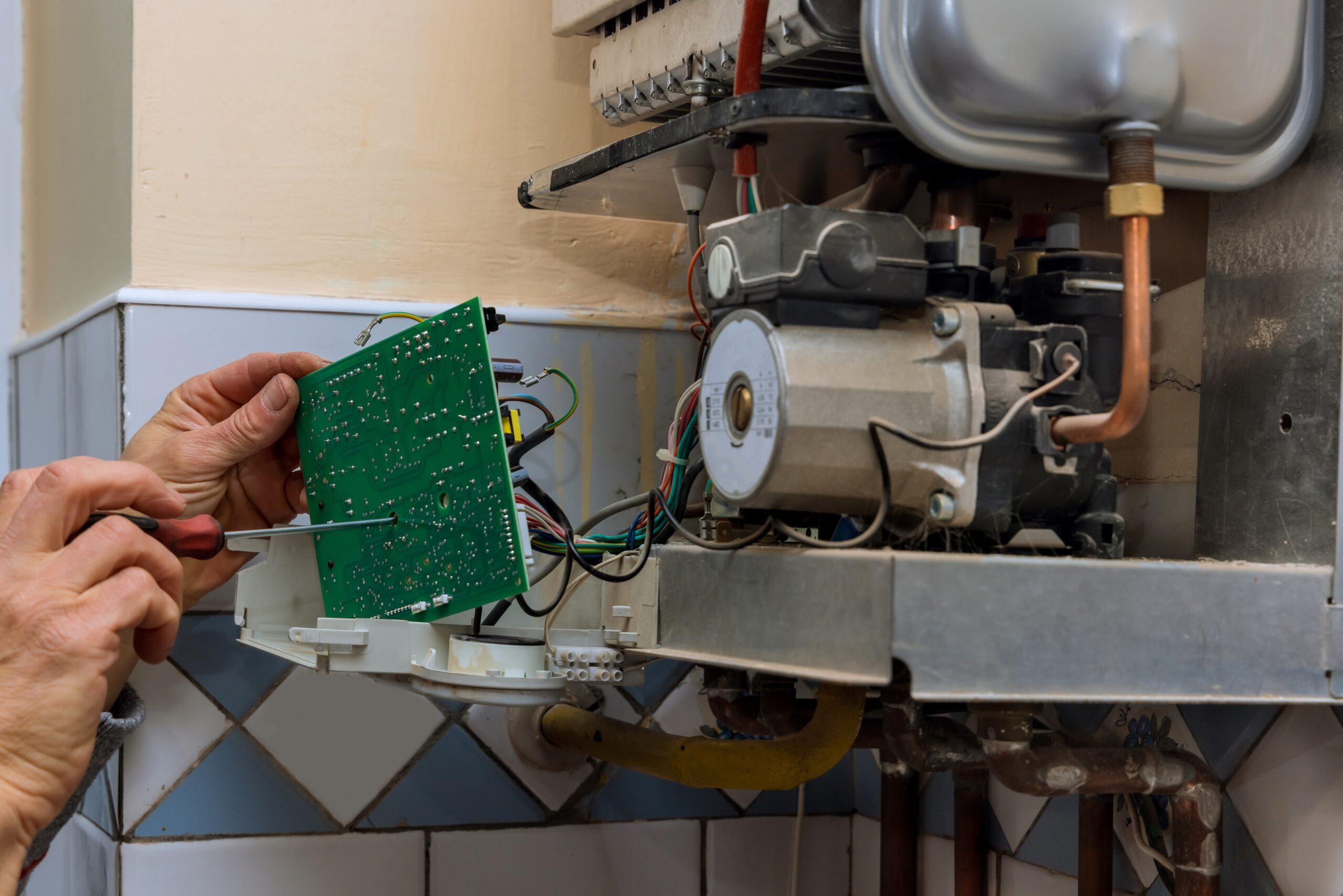
One of the most frustrating common gas boiler problems is when the boiler simply refuses to fire up. It can leave you with no heating, no hot water and no clear idea of why it has stopped. The good news is that most ignition issues come from a short list of everyday faults, many of which are simple to check.
Thermostat set too low or faulty
If your home is already warmer than the temperature set on your thermostat, the boiler will not switch on. Try turning the thermostat up slightly to see if the heating starts. Thermostats can also fail over time, so if nothing changes, the thermostat may need to be repaired or replaced.
Boiler timer has reset
After a power cut, the timer on older boilers often resets to default settings. This means the heating schedule no longer matches your normal routine. A quick check of the timer settings will usually solve this.
Fuse has tripped
A fuse can trip after a power cut or a small electrical fault. Look at your fuse box to see if any switches have dropped. Resetting the fuse may bring the boiler back to life, but if the problem keeps returning, you will need an electrician to investigate further.
No gas supply
If you cannot smell gas but the boiler will not ignite, check whether your home has gas supply. For Pay As You Go meters, make sure you still have credit.
If you can smell gas or suspect a leak, leave the property and call the emergency line on 0800 111 999.
Pilot light has gone out
Some boilers still use a pilot light. If it goes out, the boiler cannot fire. You can check through the small window on the front of your boiler. Most pilot lights are simple to relight, but always follow the instructions in your boiler manual.
Boiler pressure too low or too high
Boilers rely on steady pressure. If the pressure is outside the safe range, the boiler will switch off as a precaution.
Low pressure often comes from a small leak or from bleeding radiators.
High pressure may happen after topping up the system with too much water.
Both issues have straightforward fixes, although repeated problems should always be looked at by a Gas Safe Registered engineer.
When you should call an engineer
If the boiler still will not fire after you check the thermostat, timer, fuse and pressure, the safest step is to call a professional. Internal ignition faults are not something you can repair yourself, and forcing the boiler to run can cause more damage.
A boiler that refuses to fire is stressful, but it is usually linked to one small issue. Understanding the likely causes makes it easier to explain the problem and get help quickly, whether you are a tenant reporting it or a landlord trying to keep the property running smoothly.
Frozen Pipes, Faulty Pumps, and Other Problems That Look Alike
Some faults can seem very similar at first, which is why many common gas boiler problems get mixed up. A slow heating system, a strange smell, a sudden drop in temperature, or a loud boiler can all point to different issues. This section breaks down the ones that often get confused, so you know what you are dealing with.
Frozen condensate pipe
The condensate pipe carries waste water from the boiler to the outside drain. Because part of the pipe is outdoors, it can freeze during cold weather. When this happens, the boiler usually shuts down for safety. You will often see an error code or hear the boiler trying to start but failing.
To fix this, warm the outside section of the pipe using a hot water bottle or warm water poured slowly over it. Never use boiling water. Once the pipe thaws, reset the boiler and it should fire up again.
Worn out boiler pump
The pump moves hot water around the home. If heating takes much longer than normal or the boiler starts making grinding sounds, the pump might be worn. Most pumps last around fifteen years, but heavy use can shorten that.
A worn pump needs replacing and this job must be done by a Gas Safe Registered engineer.
Pump has no power
Sometimes the pump is fine but simply not getting power. A blown fuse or loose connection can cause this. You cannot fix this inside the boiler yourself, so a professional should check the wiring and replace the fuse if needed.
Sludge or debris build up
Sludge builds up when rust, limescale or dirt collects in the system. This blocks the pump and slows the flow of water. It can also stop radiators heating properly or cause the boiler to overheat.
A power flush may be needed to clear the system. Many homes also fit a magnetic filter afterwards to catch future debris and keep the system healthy.
Leaking pump
Pump corrosion can lead to leaks around the boiler. Even a small drip should be checked, as leaks often get worse and can cause pressure issues. A leaking pump nearly always needs replacing rather than repairing.
Why these faults often confuse people
A frozen pipe can look like a broken pump. Low pressure can look like a faulty boiler. Sludge can cause noises that sound electrical.
This is why it helps to understand the signs of each fault. It saves time, helps you report the issue clearly, and makes it easier for an engineer to solve the problem.
Clear checks, early reporting and regular maintenance all go a long way. Boilers may seem complicated, but most of the issues you will ever face fall into these familiar patterns.
FAQs About Boiler Problems, Heating Issues, and Safety
This final section pulls together quick answers to the questions people ask most often. These points help landlords and tenants understand how to spot issues early and what steps are safe to take. Each answer is short and simple, keeping in line with the tone used across Ethical Lettings guides. One more use of the phrase common gas boiler problems will be included here with safe spacing.
How often should I check my boiler pressure?
It is a good idea to check the pressure gauge every few weeks, especially in winter. Most boilers work best between 1 and 2 bars. If the reading is outside this range, your heating may struggle.
What should I do if the boiler keeps losing pressure?
If the pressure keeps dropping, you may have a small leak somewhere in the system. Look around radiators and pipes for damp spots. Re-pressurising may help for a short time, but repeated drops need a Gas Safe Registered engineer to investigate.
Is a noisy boiler something to worry about?
A light hum is normal. Loud banging, whistling or gurgling usually means there is trapped air, low pressure, limescale or a faulty pump. If the noise continues, report it so a professional can check the cause.
How do I know if a leak is serious?
Any leak should be taken seriously. Even slow drips can cause pressure loss and long term damage. Turn off the boiler if the leak is heavy and report it right away.
Can I fix low boiler pressure myself?
Yes, many people top up the pressure using the filling loop. Always check your boiler manual first. If the pressure drops again after topping up, a leak or a faulty part may be the cause.
What is the filling loop?
The filling loop lets you add water to your heating system. Some boilers have a built in loop while others need an attachable one. Opening the valves lets water in until the pressure rises to the correct level.
How often should I bleed my radiators?
Once a year is usually enough. If your radiators have cold spots or make gurgling sounds, bleeding them helps release trapped air and keeps the system running smoothly.
What should a tenant do if the boiler stops working?
Check the thermostat, timer and pressure gauge. Make sure you have credit if you use a Pay As You Go meter. If the boiler still will not start, let your landlord or managing agent know as soon as possible with a clear description of what you have seen.
When should a landlord arrange an engineer?
Landlords should act quickly if there is no heating or hot water, if pressure keeps changing, or if leaks appear. Fast action protects the property and keeps tenants safe and comfortable.
Why do so many issues fall under common gas boiler problems?
Most faults come from the same small set of causes. Pressure changes, leaks, frozen pipes, faulty pumps or ignition issues make up the majority of boiler call outs. Knowing these patterns helps everyone understand what is going on and what to do next.
Is it dangerous if I can smell gas?
Yes. Leave the property right away and call the emergency gas line on 0800 111 999. Never try to fix anything yourself if you suspect a gas leak.
Why is regular maintenance important?
A well maintained boiler lasts longer, breaks down less and runs more efficiently. Simple steps like checking pressure, bleeding radiators and reporting unusual noises early can prevent bigger problems later.